
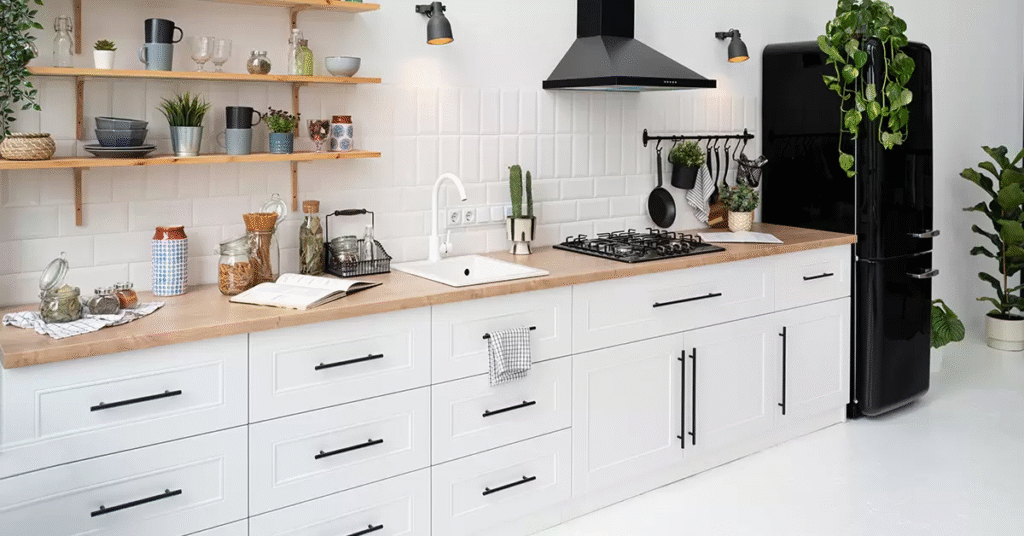
We’ve all heard that the kitchen is the heart of the home. It’s where coffee happens, late-night chats unfold, and comforting meals come together. But let’s be entirely real: it’s hard to feel the love when you open a cupboard and get taken out by a flying avalanche of plastic container lids.
An chaotic kitchen turns cooking from a relaxing ritual into a stressful scavenger hunt. The good news is that a professionally organized kitchen has very little to do with having massive square footage or buying ultra-expensive storage sets. It is simply about designing a smart, intuitive system that works with your daily flow, saves your sanity, and makes putting away groceries feel completely effortless.
The Purge: Clear the Canvas First
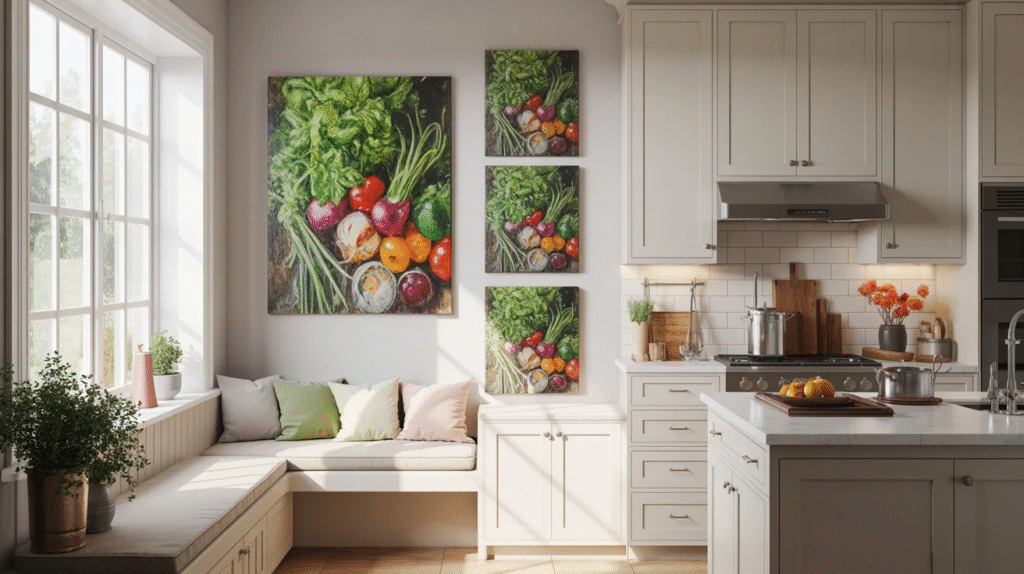
You cannot organize your way out of a clutter problem. Before buying trendy baskets or acrylic bins, you need a radical, honest decluttering session. Take a deep breath and tackle your kitchen one zone at a time—emptying cabinets completely so you can see the raw truth of what you own.
By stripping away the excess, you immediately claw back valuable real estate. It’s a lot easier to build a beautiful system when you’re only housing things you actually love and use.
Think in Tactical Cooking Zones
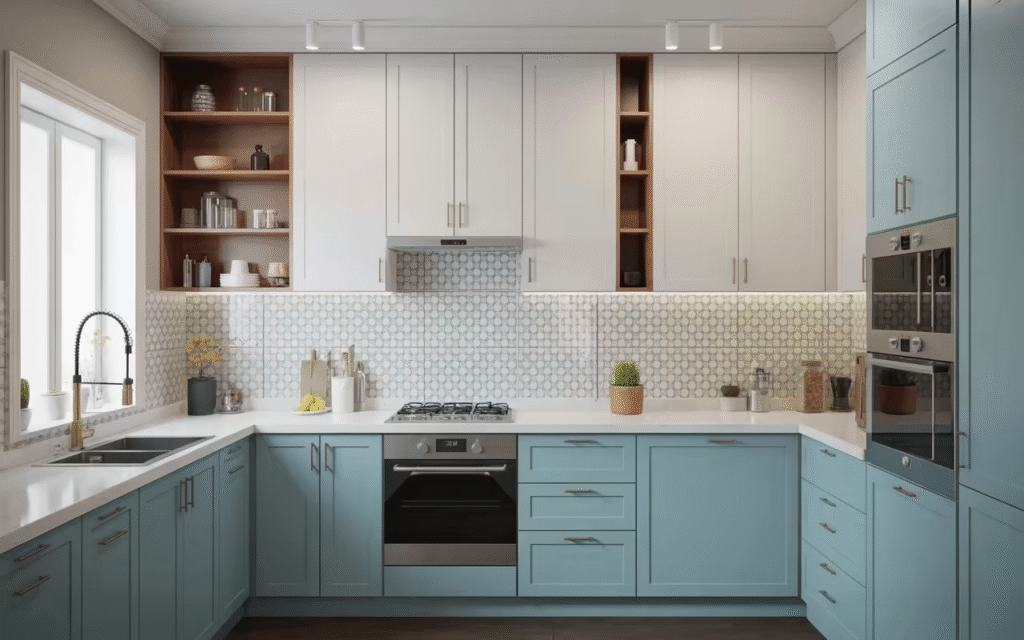
Professional kitchens function smoothly because they are mapped out by task, not just aesthetics. You can recreate this high-efficiency layout at home by treating your kitchen as a collection of specialized work stations.
- The Prep Zone: Keep your cutting boards, sharp knives, and mixing bowls within arm’s reach of your main counter space.
- The Cooking Zone: Store your frequently used frying pans, wooden spoons, olive oil, and basic seasonings directly next to the stovetop.
- The Cleanup Zone: Group everyday plates, bowls, and drinking glasses close to the dishwasher or sink to make unloading a total breeze.
Revolutionize Your Pantry with Visibility
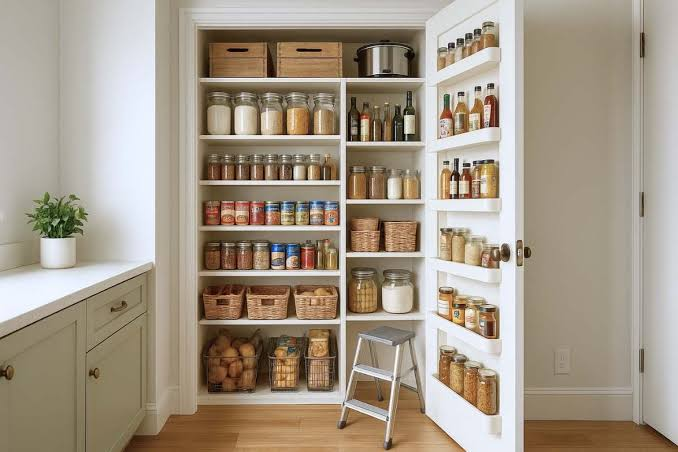
The pantry is the absolute backbone of a functional kitchen, but it’s also where ingredients go to be forgotten. If an ingredient is hidden behind three heavy cans, it will likely expire before you remember it exists. The golden rule of pantry organization is simple: if you can’t see it, you won’t use it.
Decanting dry goods like pasta, rice, and flour into transparent, airtight containers isn’t just an aesthetic choice—it lets you audit your grocery needs at a single glance and keeps pests completely at bay.
When reloading your pantry, use the “First In, First Out” rule that grocery stores use. Pull older cans and boxes to the front, and tuck the brand-new groceries behind them to drastically cut down on food waste.
Reclaim Your Cabinets and Drawers
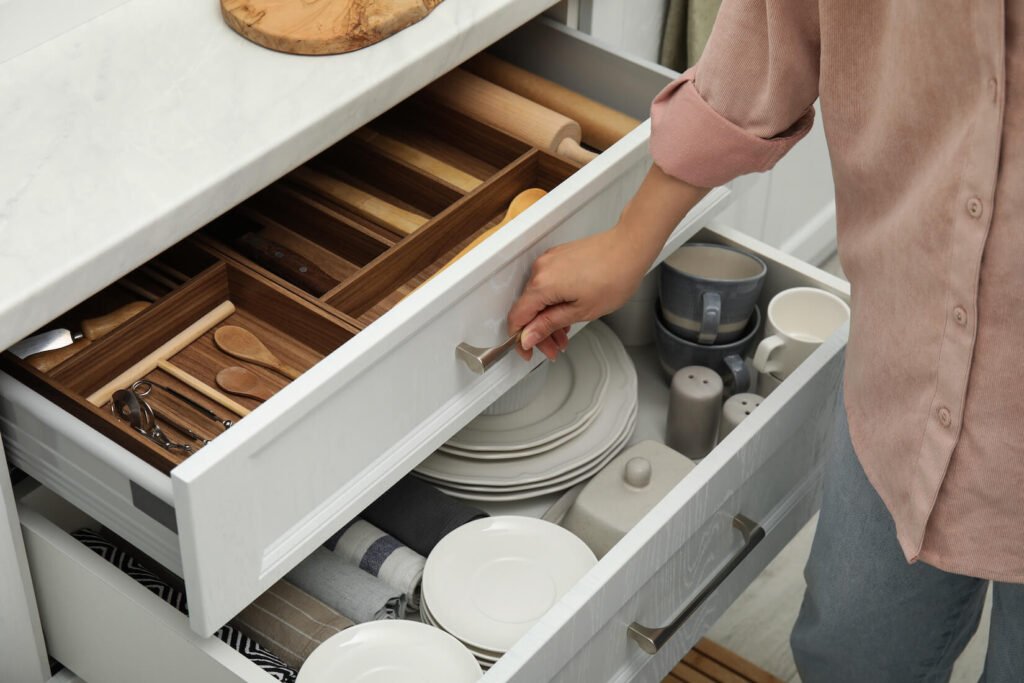
Cabinet shelves often leave a massive amount of wasted vertical space. Instead of stacking bowls dangerously high, utilize shelf risers to instantly double your usable surface area without remodeling a thing.
For deep drawers, generic junk drawers can be cured with simple bamboo or plastic dividers. Dedicate individual slots for baking tools, everyday silverware, and measuring widgets.
Master the Fridge and Countertops
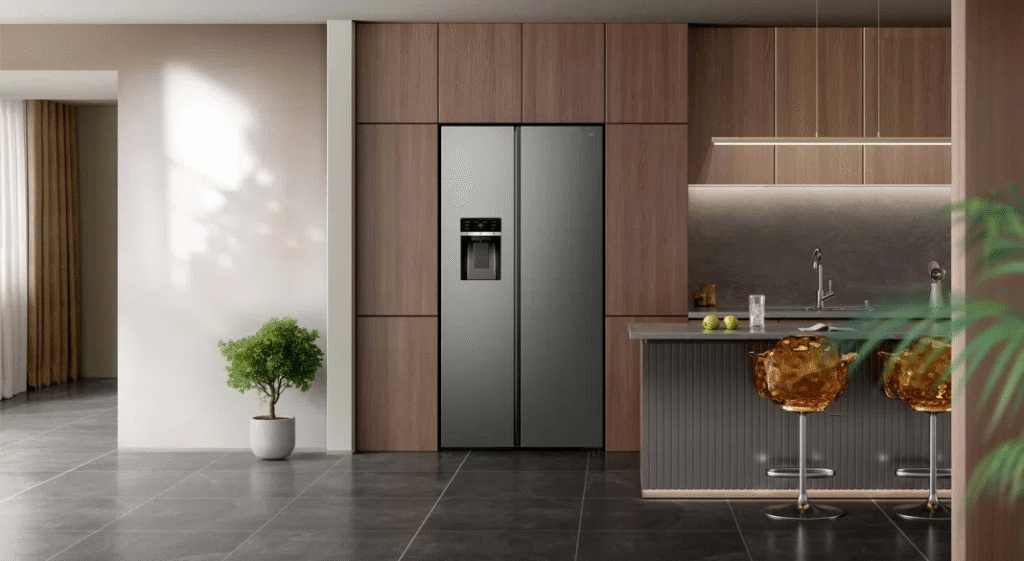
Your countertops are premium real estate—treat them that way. Keep them as clear as humanly possible to give your kitchen a bright, airy energy and maximize your actual chopping space. Only appliances that earn their keep daily (like the toaster or espresso machine) deserve a permanent spot on the counter. Everything else belongs behind closed doors.
Inside the fridge, structure creates clarity:
| Fridge Zone | Ideal Inhabitants | Why It Matters |
| Top Shelves | Leftovers, drinks, ready-to-eat snacks | Temperature is consistent here |
| Crisper Drawers | Fruits and vegetables | Controls humidity to prevent wilting |
| Door Racks | Condiments, juices, preserves | Warmest zone; avoids spoiling dairy |
Daily Rituals to Keep the Peace

True organization isn’t a one-time weekend project; it’s a living habit. Taking just five minutes every evening to run the dishwasher, wipe down the counters, and return wayward items to their designated zones prevents the clutter from slowly reclaiming the room.
Get the rest of the household on board by keeping labels clear and systems simple. When everyone knows exactly where the cereal or the garbage bags belong, maintaining a beautiful, calm, and functional kitchen stops being a solo chore and becomes second nature.
FAQ’S
1. Why is kitchen organization important?
An organized kitchen saves time, reduces clutter, and makes cooking more efficient.
2. How often should I organize my kitchen?
A quick tidy-up weekly and a deep organization every few months works best.
3. What’s the best way to organize a small kitchen?
Use vertical storage, drawer organizers, and stackable containers to maximize space.
4. How can I keep my pantry organized?
Store similar items together in labeled, airtight containers and rotate older products to the front.
5. How do I maintain an organized kitchen every day?
Clean as you cook, return items to their designated places, and wipe down surfaces after each meal.