
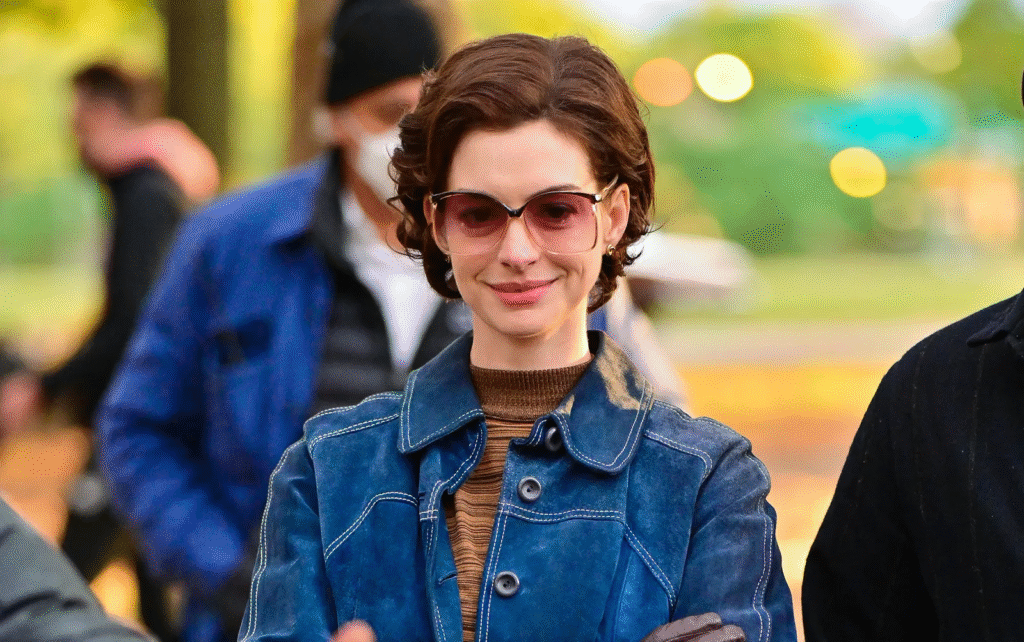
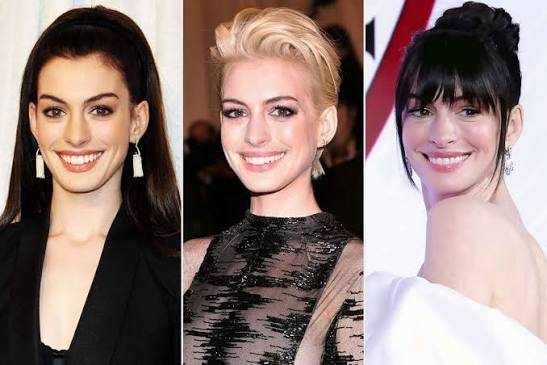
Anne Hathaway has never been an actress who plays it safe with her appearance. Over a career Haircut spanning more than two decades, she has seamlessly glided between classic Hollywood glamour, quirky indie aesthetics, and high-fashion editorial risk-taking. We have seen her with cascading princess waves, rich chocolate-brown bobs, sleek curtain bangs, and platinum blonde transformations.
Yet, despite her endless hair portfolio, one specific look has remained etched into the cultural memory as a watershed moment: the cropped pixie cut she inherited after shaving her head for her Oscar-winning role in Les Misérables.
So, when Hathaway appeared on the cover of Vogue China showcasing an edgy, micro-short pixie, the fashion world immediately stopped to look. Described as her shortest haircut in over a decade, the chop felt less like a simple beauty refresh and more like a thunderclap of nostalgia.
The Les Miserables Trauma: Hair as an Act of Sacrificial Acting
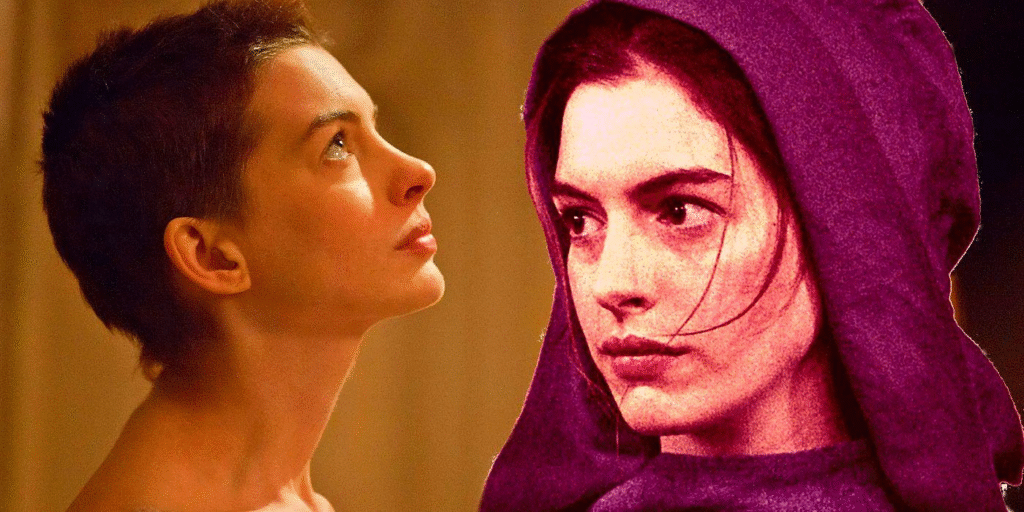
To truly understand why a simple haircut on a magazine cover can spark such widespread fascination, one must revisit the spring of 2012.
When Hathaway signed on to play Fantine in Tom Hooper’s big-screen adaptation of the iconic musical Les Misérables, she knew the role demanded extreme physical sacrifices. Fantine’s narrative arc is one of brutal, unrelenting tragic decline—a desperate mother driven to selling her hair, her teeth, and ultimately her body to support her young daughter, Cosette.
Rather than relying on a realistic wig or digital trickery, Hathaway insisted on undergoing the haircut for real, on camera, in a single, emotionally harrowing take.
For an actress whose long, glossy brown tresses had been a central component of her public image since her breakout performance in 2001’s The Princess Diaries, stripping away her hair was a deeply psychological experience. Hair, for many women—and particularly for Hollywood actresses who are constantly scrutinized for their red-carpet femininity—serves as a primary anchor of beauty, safety, and identity.
Hathaway was famously open about how terrifying the experience was. She admitted in subsequent interviews that in the moments leading up to the clippers touching her scalp, she was “shaking like a leaf.” She described the emotional fallout as being akin to mourning a piece of herself, calling the experience a “level of mental illness” that left her weeping hysterically.
The physical act of cutting her hair on camera was raw, unvarnished, and deeply uncomfortable to watch. It was a physical manifestation of her dedication to her craft—a performance so fierce and vulnerable that it ultimately earned her the Academy Award for Best Supporting Actress. The shaved head, and the textured, ultra-short pixie that grew out of it over the following two years, became the visual badge of that career pinnacle.
From Fear to Liberation: The Accidental Confidence Shift
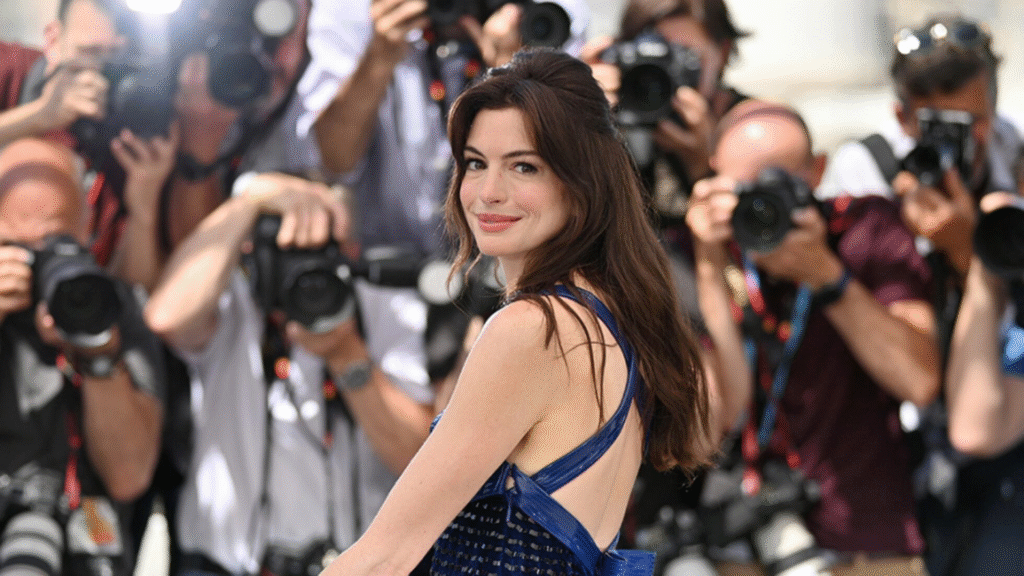
What happened after the initial shock of the Les Misérables buzz cut, however, is where the story gets really interesting.
As her hair began to grow back into a soft, cropped pixie during the 2012–2013 awards season and the subsequent press tours for Interstellar, Hathaway underwent a profound shift in self-perception. The haircut that had initially brought her to tears began to unlock a brand-new sense of personal liberation.
She famously revealed that after the initial grief passed, she woke up one day, looked in the mirror, and realized she felt like the “coolest girl in the world.”
Without long hair to wrap around her face, style into predictable red-carpet waves, or rely on as a traditional beauty cushion, Hathaway had to lean entirely into her facial features, her posture, and her intrinsic presence. The pixie cut forced her out of her comfort zone and pushed her toward a sharper, more adventurous style palette. On the red carpet, she began pairing her short hair with bold, structured gowns, avant-garde silhouettes, and edgy makeup that she might never have considered during her long-haired days.
What began as a traumatic professional obligation mutated into a liberating personal awakening. The pixie cut transformed Anne Hathaway from a classic Hollywood starlet into a genuine fashion icon.
The Psychology of Hair: “I Have to Be Me All the Time”
Beyond the fashion accolades and red-carpet wins, Hathaway once shared a deeply human observation about what short hair did for her inner life.
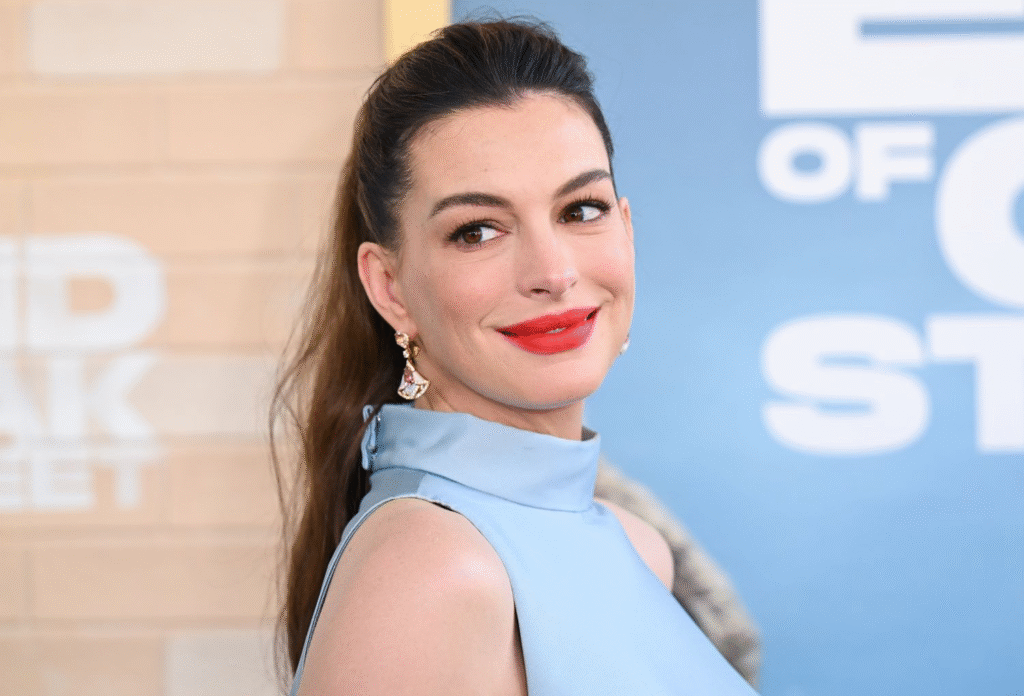
In a candid conversation with Glamour magazine during her pixie era, she reflected on how long hair often functions as a physical shield for people who are naturally introverted or self-conscious under intense public scrutiny.
Hathaway admitted that, as a naturally shy person living in the hyper-exposed world of celebrity, she used to use her long hair as a literal cloak. On days when she felt anxious, overwhelmed, or simply didn’t want to engage with the world, her routine was simple: put on a floppy hat, pull her long hair forward over her shoulders and around her face, and hide behind the curtain of brown strands. It was her security blanket—a physical barrier between herself and the flashing cameras of the paparazzi.
When her head was shaved, that security blanket vanished overnight.Suddenly, there was nothing to hide behind. She couldn’t pull her hair forward; she couldn’t duck her head and let her locks cover her cheeks. Her face was completely, permanently exposed to the world.
As Hathaway explained, the haircut forced her into a state of radical authenticity. “I have to be me all the time,” she realized. If she walked into a room, she had to occupy that room fully, with zero physical buffers.While that forced exposure was terrifying at first, it ultimately dismantled her shyness. The short hair demanded presence, posture, and eye contact. It stripped away her ability to hide and replaced it with an unshakeable, internal confidence that didn’t rely on visual crutches.
Returning to a pixie cut today carries a quiet, powerful echo of that lesson. It is a visual declaration that she no longer needs a shield to navigate the world.
Vogue China 2026: The Pixie Redefined as Pure High Fashion
Fast forward to her latest cover story for Vogue China, and the contrast between her two short-hair eras becomes striking.
When Hathaway wore a pixie in 2012 and 2013, the world viewed it through the lens of Les Misérables. Every interview, every photo shoot, and every red-carpet appearance carried the residual narrative of Fantine’s tragedy and Hathaway’s dramatic physical commitment to acting. The hair was inherently narrative-driven, tied to a movie character, and framed as a recovery process from a shaved head.
The Vogue China transformation strips all of that away. This new pixie cut is not an accident of a movie role; it is an intentional, calculated, high-fashion statement.
| Feature | The 2012–2013 Pixie Era | The 2026 Vogue China Pixie |
|---|---|---|
| Origin | Involuntary result of shaving her head for Les Misérables. | An intentional, creative high-fashion choice for a global editorial cover. |
| Styling | Soft, gamine, feminine, and growing out from a buzz cut. | Sharp, micro-cropped, edgy, and heavily textured with modern attitude. |
| Cultural Context | Framed around physical sacrifice, vulnerable acting, and award-season buzz. | Framed around mature confidence, high fashion, and visual iconography. |
| Energy | Raw, delicate, transitional, and surprisingly liberating. | Powerful, sleek, commanding, and effortlessly cool. |
On the Vogue China cover, the cut features micro-bangs, choppy texture, and razor-sharp precision around her ears and neckline. It places her mature facial structure—her wide, expressive eyes, pronounced cheekbones, and brilliant smile—at the absolute center of the frame.
Paired with modern, structured tailoring and bold architectural silhouettes, the hairstyle doesn’t scream “character transformation.” Instead, it screams power, artistic maturity, and high-fashion authority.
The Power of the Pixie in Pop Culture History
Audrey Hepburn in Roman Holiday (1953), using the chop as an act of royal rebellion and personal independence.
Mia Farrow in Rosemary’s Baby (1968), creating a sharp, Vidal Sassoon-crafted cultural sensation that defied traditional 1960s suburban femininity.
Halle Berry in the late 1990s and early 2000s, proving that short hair could be intensely sultry, powerful, and iconic on the global stage.
The pixie cut occupies a sacred, high-stakes space in fashion history. Unlike long, layered hairstyles that can feel interchangeable, a pixie cut is an immediate visual line in the sand. It alters how an individual carries their neck, shoulders, and head.
Throughout cultural history, the pixie cut has marked pivotal moments of reinvention for iconic women:
Jean Seberg in Breathless (1960), defining the quintessential, effortlessly cool French New Wave aesthetic.
When a major celebrity cuts their hair into a pixie, it signals a break from the status quo. It shifts the conversation from passive beauty to active style.
For Hathaway, joining that lineage a second time proves that her relationship with short hair was never just a one-time gimmick for an Oscar campaign. It is a core element of her visual vocabulary—a style she can call upon whenever she wants to reset the narrative and remind the world of her versatility.
Fashion, Nostalgia, and the Art of the Non-Linear Style Journey
We live in a culture obsessed with nostalgia, but the most successful fashion moments are those that refuse to simply copy the past.
Had Hathaway tried to recreate her exact 2012 look, it might have felt forced or overly reliant on past glory. What makes her 2026 Vogue China cover so compelling is that it treats her style history not as a rigid timeline, but as a rich palette to draw from.
Her return to short hair demonstrates a fundamental truth about personal evolution: growing up doesn’t mean leaving your past looks behind forever. Instead, it means coming back to them with more wisdom, better tools, and a clearer sense of self.
When Hathaway wore a pixie in her early thirties, she was still navigating the intense pressure of Hollywood expectations, defending herself against internet toxicity (the era of “Hathahate”), and learning how to stand tall without a security blanket. Now, in her mid-forties, she returns to the cut as an established cinema icon, a fashion darling, and a woman who has nothing left to prove to anyone.
The hair is short again, but the woman wearing it is entirely different.
More Than Just a Haircut
It is easy to dismiss celebrity hair changes as trivial tabloid fodder—a temporary shift meant to generate clicks, sell magazines, or spark social media trends. But in the case of Anne Hathaway, hair has always been inextricably linked to her creative identity and personal growth.
Her latest Vogue China cover is a striking visual reminder that true beauty doesn’t lie in conforming to traditional, safe standards of long-haired glamour. It lies in the courage to strip away the noise, expose your features to the world, and own the room without needing anything to hide behind.
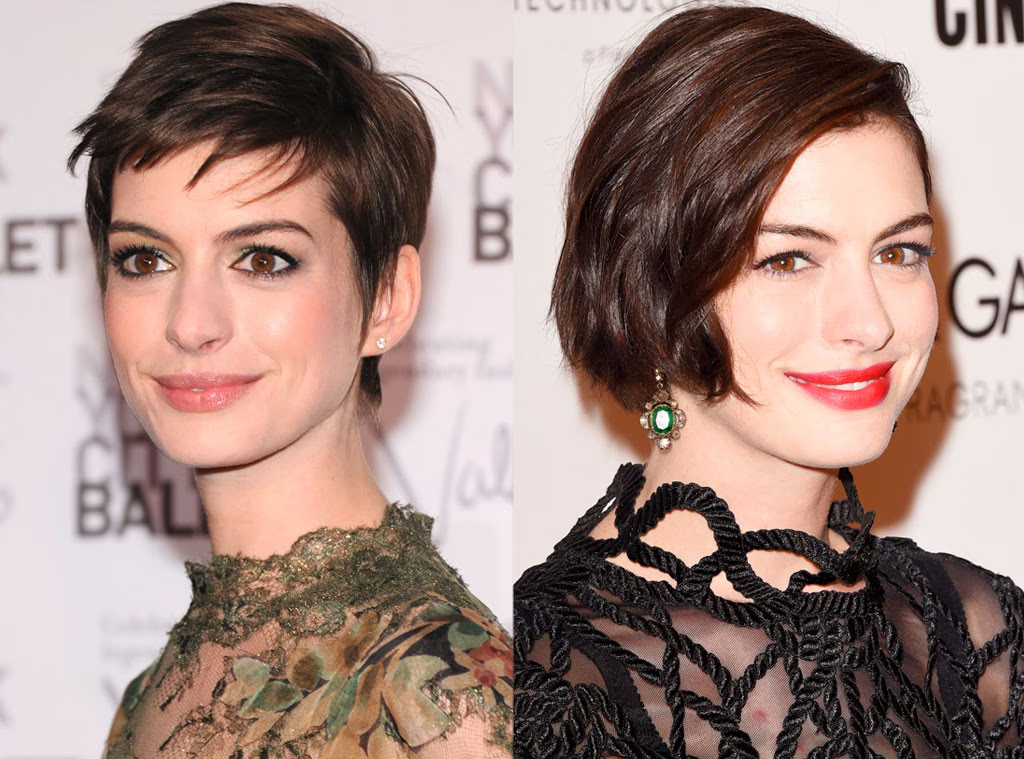
While the new cut isn’t a literal carbon copy of her 2012 look, the spiritual line connecting the two is undeniable. But this time around, the energy is entirely different. Where her original short hair was forged in the fire of cinematic trauma and raw physical vulnerability, her 2026 iteration is a masterclass in high-fashion ownership, mature self-assurance, and refined editorial edge. It raises a fascinating question about celebrity style, personal identity, and the lingering weight of our most iconic physical transformations: What happens when you return to a look that once completely redefined how the world saw you?
Whether she keeps this edgy pixie for years or lets it grow back into her signature long waves, one thing is abundantly clear: Anne Hathaway no longer needs her hair to do the talking for her. The pixie cut isn’t a shield, a character requirement, or a compromise. It is simply the crown of an actress who has mastered the art of being herself—boldly, visibly, and completely without apology.
FAQ’S
1. What hairstyle did Anne Hathaway debut for Vogue China?
Anne Hathaway showcased a short, edgy pixie haircut on the cover of Vogue China, marking one of her shortest hairstyles in more than a decade.
2. Does Anne Hathaway’s new haircut remind fans of Les Miserables?
Yes. The short pixie brings back memories of Hathaway’s Les Misérables era, when she famously shaved her head to play Fantine in the 2012 film adaptation.
3. Why did Anne Hathaway shave her head for Les Miserables?
Hathaway shaved her head as part of her physical transformation for the role of Fantine. She later spoke about how nervous she was before the haircut but eventually felt confident with short hair.
4. Has Anne Hathaway worn short hair before?
Yes. After shaving her head for Les Misérables, Hathaway’s hair grew back into a pixie style during 2012 and 2013. Her latest Vogue China look recalls that earlier short-hair period.
5. What did Anne Hathaway say about having short hair?
Hathaway previously described feeling more confident with short hair and explained that she could no longer use her hair or a hat to hide when she wanted to avoid attention. She said the experience encouraged her to simply be herself.