
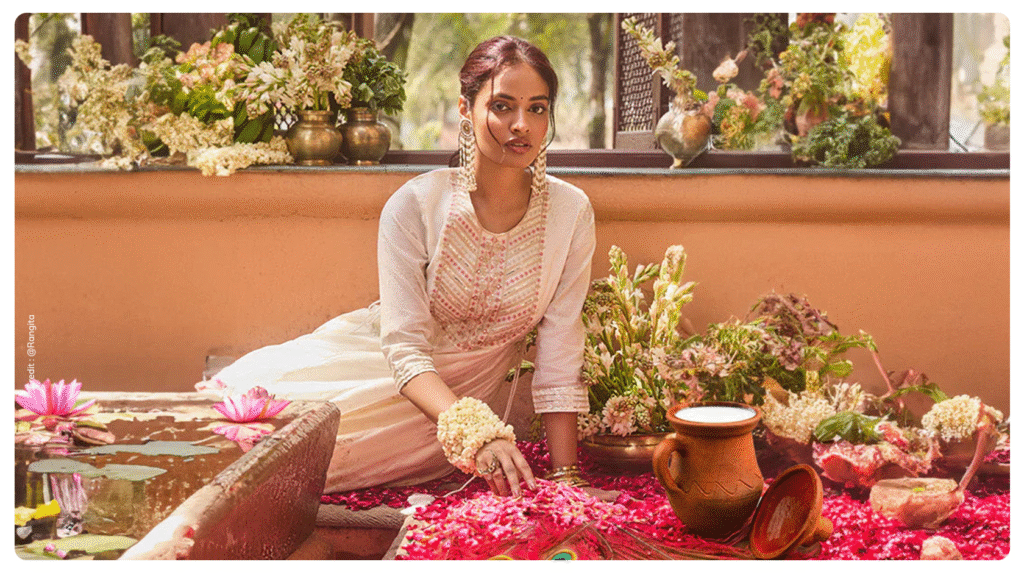
Krishna Janmashtami is one of those rare Indian festivals Janmashtami Fashion where deep spiritual devotion and pure, unrestrained joy sit comfortably at the same table. Marking the birth of Lord Krishna—the eighth avatar of Lord Vishnu—the occasion brings an unmistakable shift in atmosphere long before the actual day arrives. Homes are swept clean and decorated with fresh marigolds, local temples glow under strings of warm fairy lights, devotional melodies echo through neighborhood streets, and families turn their thoughts toward age-old customs passed down through generations.
While the core narrative of Janmashtami remains universal across India, the way the day unfolds within individual homes and regions is remarkably diverse. In some households, the festival is observed with quiet, contemplative discipline, centered around daylight fasting and an intimate midnight prayer. In other places, whole neighborhoods turn into vibrant hubs of community activity—marked by elaborate street processions, theatrical plays (Rasleela), high-energy human pyramids, and communal feasts.
What makes Janmashtami so enduring is precisely this versatility. It offers room for personal expression within traditional frameworks. Every family develops its own distinct rhythm: the precise blend of spices for the midnight panjiri, the specific way the baby cradle is draped, or the threshold where tiny white footprints are painted to welcome Bal Krishna into the home.
The Spiritual Purpose of Vrat (Fasting)
For millions of devotees, the morning of Janmashtami begins with vrat (fasting)—a deliberate practice of physical and mental restraint designed to draw one’s focus inward ahead of the midnight birth hour. Far from being a mere ritual obligation, fasting serves as a spiritual reset, encouraging patience, mindfulness, and devotional clarity.
The approach to fasting varies widely according to family tradition, age, and individual health:
- Nirjala Vrat: A strict, waterless fast observed by deeply committed devotees from sunrise until the midnight puja concludes.
- Phalahar Fasting: The most common approach, where cereal grains, pulses, regular table salt, onions, and garlic are set aside. Instead, devotees consume fresh fruits, milk, yogurt, nuts, and falahari staples cooked exclusively with rock salt (sendha namak).
- Mindful Devotion: Rather than focusing purely on food restriction, those observing the fast often dedicate extra time to reading sacred texts like the Bhagavad Gita or the Srimad Bhagavatam, chanting mantras, or participating in temple singing.
Preparing the Sanctuary: Home & Temple Decorations
Long before dusk falls, preparation begins in the sanctuary of the home. Decorating for Janmashtami is treated as an active form of devotion, transforming everyday living spaces into welcoming sanctuaries for the divine child.
The focal point of every home display is the jhula—a small wooden or metallic cradle housed inside the primary prayer room. Family members drape the swing in bright silks, velvet, woven marigold garlands, and fragrant jasmine buds.
In many parts of North and Central India, families also set up elaborate dioramas called jhankis. Using small clay figurines, cotton wool to represent clouds, real sprouting grass, and tiny water channels, adults and children work together to recreate famous moments from Krishna’s childhood in Gokul and Vrindavan.
The Midnight Moment: Welcoming the Divine Child
According to scriptural lore, Krishna was born at midnight in a dark, subterranean prison cell in Mathura, during a stormy night in the month of Shravana (or Bhadrapada). Because of this timing, the hour between 11:30 PM and midnight carries an electric, deeply expectant atmosphere.
As the clock approaches midnight, the ambient noise of daily life falls away, replaced by the rhythmic chanting of the Vishnu Sahasranama or vibrant, chorus-led bhajans. At precisely 12:00 AM, the idol of Laddu Gopal or Bal Krishna is unveiled. Devotees blow conch shells (shankh), ring handbells continuously, and perform abhishekam—a ritual bath using panchamrit (a sacred mixture of milk, curd, honey, ghee, and sugar).
After being bathed, dried, and dressed in new festive attire—complete with a tiny peacock feather crown (mor mukut)—the idol is gently placed inside the decorated jhula. Family members take turns pulling the cradle string, swinging baby Krishna while singing “Nand Ghar Anand Bhayo, Jai Kanhaiya Lal Ki.”
Sacred Offerings: The Culinary Traditions of Bhog
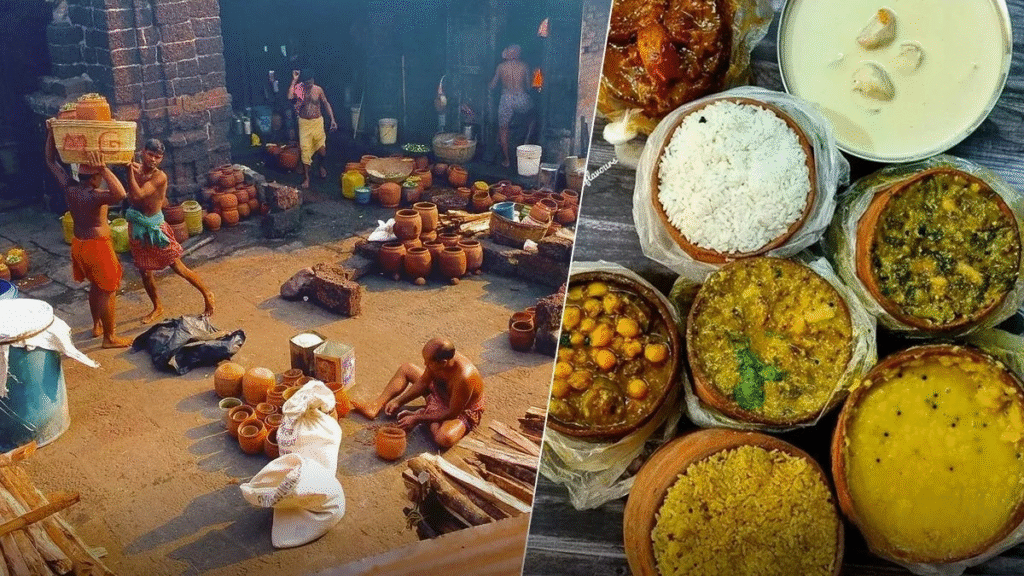
Food on Janmashtami holds deep spiritual meaning. Because so many stories of Krishna’s early years revolve around his fondness for fresh milk, butter, and curd, dairy products form the cornerstone of the festive menu.
The dishes prepared for Janmashtami fall into two distinct categories: bhog (food offered directly to the deity at midnight) and falahari meals (consumed by family members breaking their fast).
- Makhan Mishri: Freshly churned, unsalted white butter mixed with rock sugar crystals (mishri). It is considered Krishna’s absolute favorite offering.
- Dhaniya Panjiri: A fragrant, roasted blend of coarsely ground coriander powder, powdered sugar, ghee, dry fruits, and lotus seeds (makhana). Since wheat flour is avoided during fasting, coriander powder acts as the traditional base for midnight prasad.
- Makhana Kheer: A rich, slow-cooked dessert made by simmering puffed lotus seeds in whole milk, sweetened with sugar, and infused with green cardamom and saffron strands.
After the midnight prayers are complete, this food is distributed to everyone present as prasad—a blessing that marks the joyous conclusion of the day’s fast.
Festive Wardrobe & Modern Personal Style
While Janmashtami is rooted in ancient rituals, dressing up for the festival adds a lighthearted, expressive dimension to the day. Festive fashion allows people to honor tradition while staying comfortable through long hours of rituals.
When selecting an outfit for Janmashtami, the focus remains on balancing rich color palettes with practical, breathable fabrics:
- Krishna-Inspired Colors: Vibrant butter yellow (Pitambari), deep ocean blue, peacock green, and warm ivory are universally popular choices for the occasion.
- Comfortable Fabrics: Because Janmashtami falls during the humid monsoon months across much of India, breathable textiles like handloom cotton, Chanderi, georgette, and linen-silk blends are preferred over stiff, heavy synthetics.
- Statement Accessories: Minimalist attire can instantly be elevated with a classic pair of oxidized silver jhumkas, a stack of thin glass bangles, a delicate bindi, or traditional leather juttis.
Dahi Handi: High Energy on the Streets
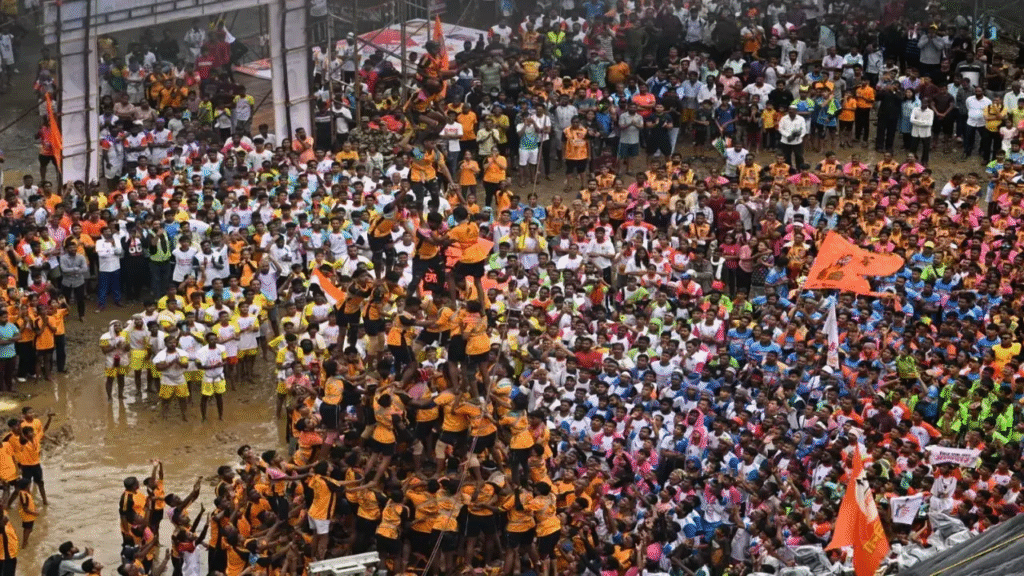
While home-based celebrations lean toward quiet devotion, public street celebrations in states like Maharashtra and Gujarat provide high-octane communal energy through Dahi Handi.
Inspired by Krishna’s legendary childhood antics of forming human towers with his cowherd friends (gopas) to reach earthen pots of butter hidden near ceilings, Dahi Handi turns mythology into athletic spectacle.
- Human Pyramids: Organized teams of participants, known as Govindas, build multi-tiered human towers in front of massive urban crowds.
- Teamwork and Trust: Building a stable pyramid requires incredible physical strength, flawless balance, and complete reliance on teammates. The base consists of the heaviest members, while lighter, agile youngsters climb to the top level to break the hanging pot with a small stick.
- Communal Atmosphere: As thousands gather to cheer, local organizers spray water jets over the participants to keep them cool under the midday sun. Bands play energetic folk rhythms, transforming city squares into roaring, joyful arenas.
Cultural Traditions Across Different Regions
One of the most fascinating aspects of Janmashtami is how seamlessly it adapts to different regional cultures across India:
- Mathura and Vrindavan (Uttar Pradesh): As the birthplace and childhood home of Krishna, these twin towns host some of the largest celebrations in the world. Temples run 24-hour devotional chanting, streets are packed with grand processions, and professional theater groups perform night-long Rasleela plays depicting episodes from Krishna’s life.
- South India (Tamil Nadu & Andhra Pradesh): Known locally as Gokulashtami, homes are decorated with intricate rice powder designs (Kolam). Women prepare specialized crisp savory snacks like Seedai, Murukku, and Laddus as sacred offerings, while tiny rice flour footprints are drawn from the entrance door straight to the family prayer altar.
- Odisha and West Bengal: Celebrations include reading chapters from the Srimad Bhagavatam in village community centers, followed by the preparation of traditional milk-based sweets like Chhena Poda and Kheer.
Dressing Children: Passing the Story Forward
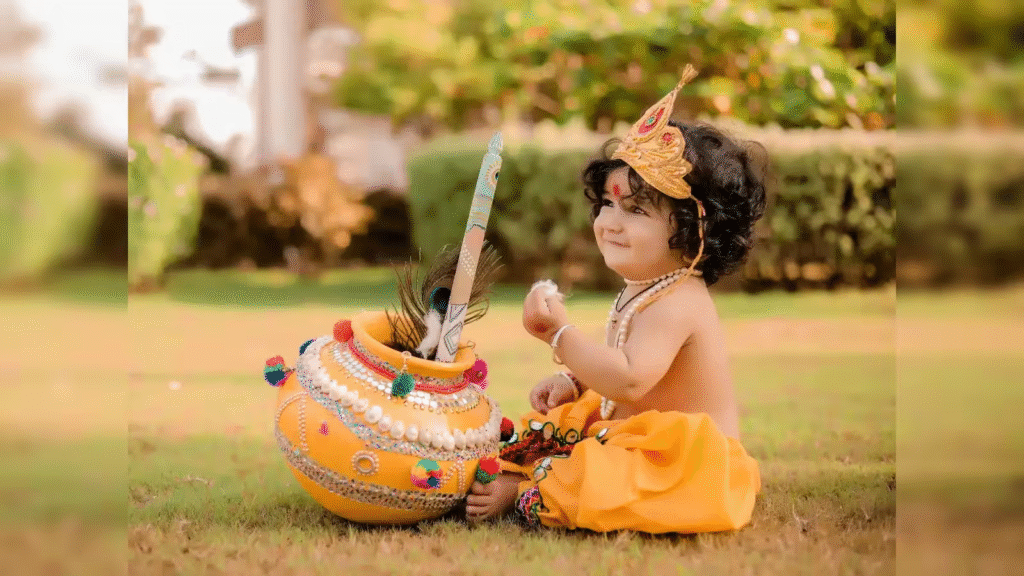
For young children, Janmashtami is often one of the most memorable events of the year. In schools, community halls, and homes, toddlers and young kids are dressed up as little Krishna or his companion Radha.
Dressing a child in a small yellow dhoti, placing a peacock feather in a lightweight headband, and giving them a wooden toy flute is more than just a sweet photo opportunity. It brings ancient mythology into the living room, allowing children to actively inhabit the story rather than just hearing about it.
The Enduring Spirit Behind the Traditions
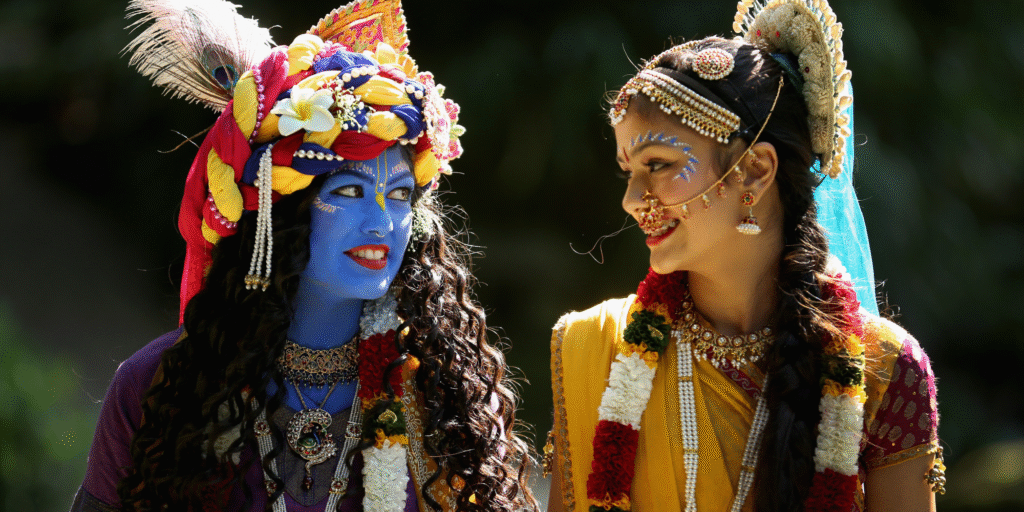
Beyond the grand street displays, the vibrant wardrobe choices, the fasting discipline, and the midnight prayers, the true essence of Janmashtami lies in the quiet transmission of love across generations.
It is found in a grandmother showing her granddaughter how to roll coriander panjiri, a father lifting his son onto his shoulders so he can see the temple idol through the crowd, or a family sharing warm makhana kheer after staying awake together until midnight.
Through these simple, repeated actions, Janmashtami keeps cultural memory alive. It bridges the gap between ancient devotion and modern life, offering every generation a joyful, welcoming space to connect with their heritage and with one another.
FAQ’S
1. What is the main tradition of Krishna Janmashtami?
Devotees celebrate Krishna’s birth with fasting, prayers, bhajans, and a midnight celebration.
2. Why is Janmashtami celebrated at midnight?
Tradition holds that Lord Krishna was born at midnight, so devotees mark his birth around this time.
3. What food is prepared on Janmashtami?
Fruits, milk-based sweets, makhana, nuts, and other fasting-friendly foods are commonly prepared and offered as bhog.
4. Why do children dress as Krishna and Radha?
Children dress up to take part in cultural celebrations and bring Krishna’s childhood stories to life.
5. What is the Dahi Handi tradition?
Dahi Handi involves teams forming human pyramids to break a suspended pot, inspired by stories of Krishna’s playful childhood.